The Hariana is one of the most prominent dual-purpose cattle breeds of the Indo-Gangetic plain, named after its home state of Haryana. Known for its hardiness and versatility, it has been a cornerstone of agricultural life in Northern India for generations.
Key Facts About the Hariana Breed
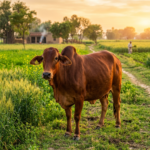
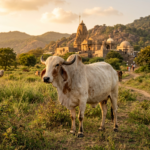
Hariana breed zebu type bull in north India.
Origin: Native to the Rohtak, Hisar, Karnal, Kurukshetra, Jind, Jhajjar, and Gurugram districts of Haryana, though they are also popular in parts of Uttar Pradesh, Punjab, and Madhya Pradesh.
Dual-Purpose: They are highly valued as a dual-purpose breed; the cows provide fair amounts of milk, and the bullocks are powerful, energetic work animals used for plowing, threshing, and transport.
Appearance: Typically white or light grey, these cattle have a medium-to-large, compact frame. A defining feature is their “coffin-shaped” skull, long and narrow face, and small horns.
Work Efficiency: Hariana bullocks are famous for their speed and endurance; they can pull heavy loads for long distances at a steady pace, making them ideal for road transport and field work.
Milk Yield: While they are not specialized dairy cows, they are productive, typically yielding between 600 to 1,000 kg per lactation, with some well-managed animals producing up to 12 liters a day.
Climate Adaptability: They are exceptionally hardy and well-adapted to the hot, tropical climate of North India, showing great resilience against diseases and changing environmental conditions.
Historical Significance: Formerly known as ‘Hisar’ or ‘Hansi’ cattle, the breed has played a vital role in sustaining rural livelihoods in the Indo-Gangetic plains for centuries.
The Hariana breed remains a preferred choice for many farmers who require a sturdy, multi-functional animal that can support both dairy needs and heavy-duty agricultural labor.