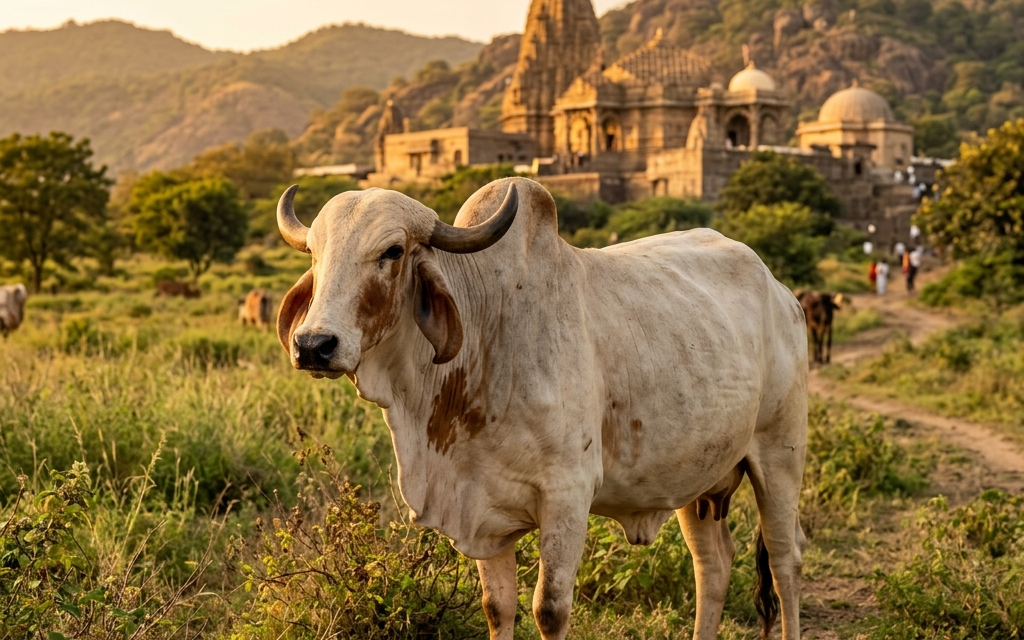
The Nari cow, also known as the “Sirohi” cattle, is a unique, nomadic breed found primarily in the Aravalli hill ranges of Rajasthan and Gujarat. The name “Nari” comes from the word “Nar,” which refers to hills, reflecting their natural habitat.
Key Facts About the Nari Breed
Origin and Habitat: They are primarily found in the Pali and Sirohi districts of Rajasthan, as well as the Banaskantha and Sabarkantha districts of Gujarat. They are well-adapted to the warm, hilly, and uneven forest terrain of the Aravalli range.
Nomadic Lifestyle: Nari cattle are traditionally maintained as migratory herds by pastoral communities like the Raika, often kept in large groups of 20 to 100 animals.
Dual-Purpose: Like many indigenous breeds, they are highly valued for both their milk production and their excellent draught power, making them indispensable for both dairy and agricultural farm work.
Distinctive Features: They are medium-sized animals with compact bodies. A notable physical trait is their impressively long horns—often considered some of the longest among Indian cattle breeds—which are spirally curved.
Appearance: Cows are generally white or greyish-white, while bulls may also be dark grey or black.
Milk Production: While they are a hardy, low-maintenance breed, they provide moderate milk yields, typically ranging from 3 to 8 kg (with some reports of higher yield under intensive management), and their milk is known for its medicinal and A2 properties.
Durability: They are incredibly tough and active, capable of walking long distances and thriving on open grazing even in changing weather conditions.
Economic Role: They play a vital role in the rural livelihood of local pastoralists, supporting families through milk and the strength of their bullocks.
The Nari breed is a classic example of a “hidden” treasure of India’s indigenous livestock, perfectly adapted to a nomadic lifestyle and essential for the survival of mountain-dwelling pastoral communities.