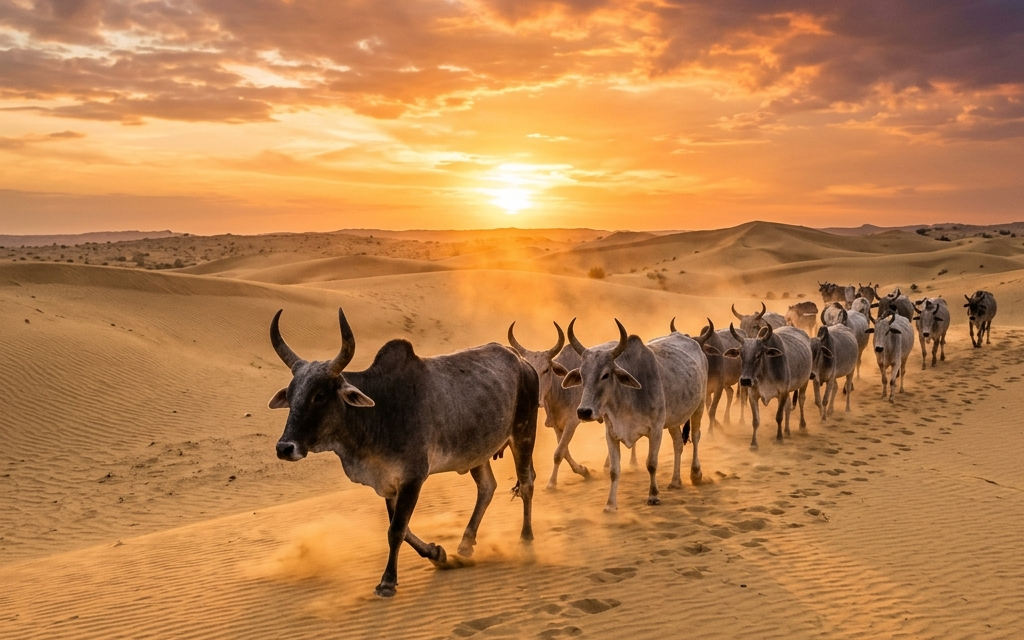
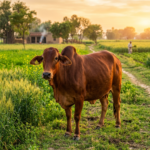
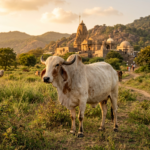
The Nagori is a famous indigenous cattle breed from the Nagaur district of Rajasthan, India. They are highly respected for their speed and strength, making them one of the most preferred breeds for agricultural work and transport in the region.
Key Facts About the Nagori Breed
Nagori cattle from India, an Indicus-type breed known for draught purposes.
Origin: They take their name from their home tract, the Nagaur district of Rajasthan, and are also found in the neighboring Jodhpur and Bikaner areas.
Primary Use: Unlike dairy-focused breeds, the Nagori is primarily a “draught” breed, meaning they are bred for their physical power to pull carts, plow fields, and transport heavy farm produce.
Appearance: They are usually white or light grey in color and have a fine, active build. They are known for being “long and lean,” which gives them a natural agility and speed.
Agility: They are famous for their quick movement, which makes them very popular for “trotting” carts, where they can travel long distances faster than many other breeds.
Docile Nature: Even though they are strong and active, they are known to be calm and easy to handle, which makes them excellent partners for farmers.
Environmental Adaptability: Because they have lived in the desert climate of Rajasthan for generations, they are extremely hardy and can survive in difficult weather conditions.
Physical Traits: They have strong, sturdy legs and compact hooves, which help them walk easily on sandy or uneven desert ground.
A Working Partner: While they do provide some milk, their main value to a farmer is their ability to work hard in the field from sunrise to sunset.
Conservation Status: As with many traditional breeds, it is important to support the farmers who keep Nagori cattle so that their unique strength and agility are not lost to history.
The Nagori cow is an excellent example of a breed perfectly designed by nature to help humans survive and thrive in a challenging desert environment