The Mewati, also known as the “Kosi” breed, is an indigenous dual-purpose cattle breed found across the regions of Rajasthan, Haryana, and Uttar Pradesh. They are highly regarded by farmers for their unique combination of strength and milk production.
Key Facts About the Mewati Breed
Origin: Named after the Mewat region, their breeding tract covers the Alwar and Bharatpur districts of Rajasthan, the Gurgaon and Faridabad districts of Haryana, and the Mathura district of Uttar Pradesh.
“Kosi” Name: The breed is often called “Kosi” because a large number of these cattle are traditionally traded at the famous market in the town of Kosi (Mathura district).
Dual-Purpose: They are valued for both their ability to work hard in fields and their reliable milk yield, making them a practical choice for small-holder farmers.
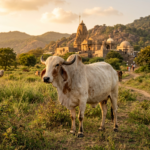
Appearance: Mewati cattle are typically white, though some may have darker shades on their neck, shoulders, and quarters. They have a long, narrow face and a slightly bulging forehead.
Strength and Endurance: These cattle are famous for their power and docile nature, making them excellent for heavy tasks like plowing, pulling carts, and drawing water from deep wells.
Milk Yield: While they are primarily known for their draught power, they are also good milkers, with an average yield of about 950–1,000 kg per lactation.
Resilience: Being a native breed, they are naturally adapted to the local climate, hardy, and capable of working in tough, dry, or demanding agricultural conditions.
The Mewati breed is a vital part of the agricultural heritage in the border regions of these three states, representing a breed that has evolved to balance the daily needs of rural farm life.